
Field notes · Kavea & Co
How I look at a D2C brand that's stuck.
I'm Kavea, a Fractional Cofounder. These are the 5 things I check, in this order, when a founder tells me sales have stalled.



Before we start
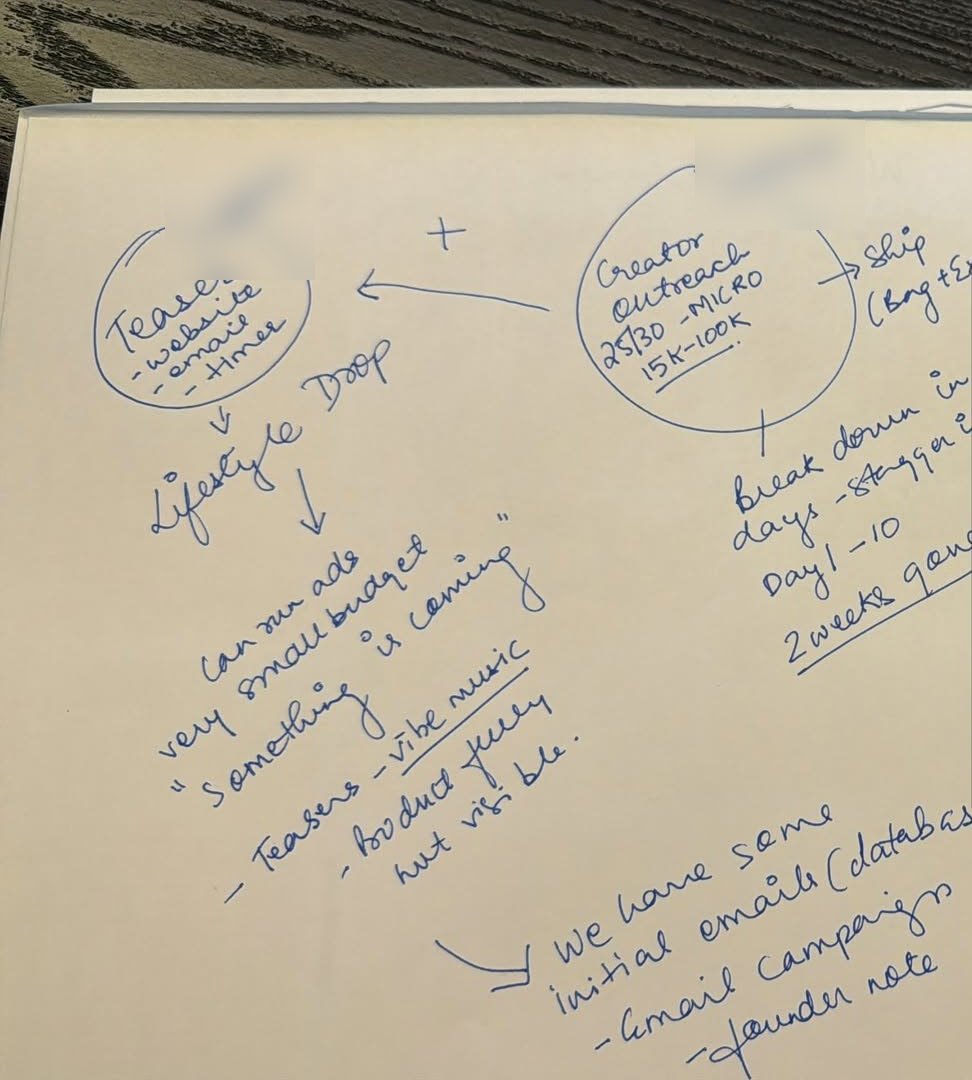
I still write it all by hand.
In the world of AI, I keep a notebook. Every call ends up on paper first.
I built and sold my own D2C brand. So these notes aren't theory. They're what I wish someone had told me.
"Businesses don't stall because of effort. They stall because of structure."
Step 1
I listen before I diagnose.
What most founders expect
A quick answer in the first 10 minutes. A list of tactics.
What I do instead
I let you talk until you've emptied yourself out. While you talk, the patterns string together.
What I listen for
The gap between what you think the problem is, and what it actually is. Then the solutions come, without holding back.
"There's someone else thinking about my business."
what founders keep telling me after a call

Step 2
The money check.
What most founders track
Topline. How much came in this month.
What I look at
What's left after every cost: making it, shipping it, and finding the customer.
2x → 3x
Example · designer label
She priced at 2x cost. After making a piece and finding a buyer, almost nothing was left. We moved her to 3x.
"Stop chasing your topline. Track what's left after every cost."
and know your own numbers. Don't be afraid of the finance talk.

Step 3
What the brand stands for, and who it's really for.
What most founders do
Copy competitors. Add more products. Hope a wider net catches more.
What I look at
One clear buyer. One clear promise. And whether you, the founder, show up in it.
11 months
Example · a diluted collection
Budget gone on a collection doing 4 orders a week. We cleared up the buyer and cut some products. 11 months later: first break-even month.
"Friends and family buying is not product-market fit. Strangers paying, and coming back, is."

Step 4
Where sales actually come from.
What most founders do
Spend more on ads and wait.
What I check
- Does the website look as good as the product?
- What do the ads bring back?
- Who comes back to buy again?
- Are we selling to the right buyer?
1 → 1.5
Example · half of revenue on ads
Ads made back only 1.5 times what they cost. Around 3 times or more is normal. The fix: an agency that works on profit, a steady supply of new ads, and more for the 35% who already return.
"Call your abandoned carts."
one brand got a big week of orders this way, with no extra ad spend

Step 5
A business that runs without you.
What most founders do
Do every job alone. Even go to their own brand shoots.
What I put in place
Month 1: full audit and the investment picture upfront. Then the right team. Then, mostly, accountability.
From my own exit
I sold Bombay Toy Company in 2024. What made it sellable wasn't just revenue or brand. It was independence: systems that didn't rely on me.
"Hire the right people and trust them."

That's the notebook
Want me looking at your business?
I work inside founders' businesses, on every call, in every decision, without taking equity. Start with one conversation.